Denmark's national science centre · since 1991
A museum of science and technology in Hellerup, just north of Copenhagen. Here everything can be touched, and the complex becomes clear. This is the story of how a single idea grew into a world-class science centre.
From idea to reality
The idea for Experimentarium was born in the USA. During the 1980s, Esben Dragsted, then chairman of the board of the Egmont Foundation, visited several large American science centres. He was struck by the sight of children and teenagers having a fun day while learning about science and asking questions about the world around them.
Dragsted asked himself: “Why doesn't Denmark have a science centre?” A place where children could gain knowledge through play, where you could be active rather than just read and listen. When he came home, he immediately set out to win others over to the idea of building a Danish science centre.
In 1984 he began collaborating with education inspector Jannik Johansen — who later became Experimentarium's first chairman of the board, serving from 1986 to 2016.
Timeline
The journey from the first report to a world-class science centre took three decades — with proof-of-concept tests, a royal opening and a major fire on the eve of its second birth.
Dragsted gathered a team of brilliant minds to prove the idea was realistic. The report “Et Dansk Science Center?” convinced the Egmont Foundation that a science centre was a wonderful way to spark young people's fascination with science and technology. The foundation was laid.
To find out whether guests would come to an interactive science exhibition, the exhibition “Menneske – her er din krop” opened in Copenhagen. Over three months, 71,900 people visited. The concept worked! The Egmont Foundation offered 25 million kroner for the first years of operation, the Tuborg brewery offered a soft-drink bottling hall in Hellerup free of charge for 20 years, and the Ministry of Education promised a further 10 million kroner.
The first director, Asger Høeg, was given the task of raising 56 million kroner. The project was presented to 100 representatives of Denmark's largest foundations, companies and research institutions — and the sum came together quickly. The new centre got its name: Experimentarium.
On 9 January 1991, Her Majesty Queen Margrethe II and His Royal Highness Prince Henrik officially inaugurated Experimentarium. The slogan was “Du bliver sjovt nok klogere” — “You'll get smarter, funnily enough.”
The lease on the Tuborg hall was due to expire in 2011. But already in 2008, thanks to donations from Gentofte Municipality and the Augustinus, Villum Kann Rasmussen, Oticon and Thomas B. Thriges foundations along with industry associations, the building was purchased. For the first time, Experimentarium was master in its own house.
After 8 million happy guests, the building had worn out. It was decided to build a new Experimentarium — a science centre of absolute world class. During construction the museum moved to a temporary venue, Experimentarium City, on Papirøen island in Copenhagen's harbour.
Under the new director, Kim Herlev, the old Tuborg hall was rebuilt and a brand-new exhibition created. A fire pushed the planned 2016 opening back by several months, but the goal was reached. On 26 January 2017 the new Experimentarium opened its doors: the exhibition area had doubled, guests were met by 16 interactive exhibitions and the world's first interactive cinema based on motion technology.
What it's famous for
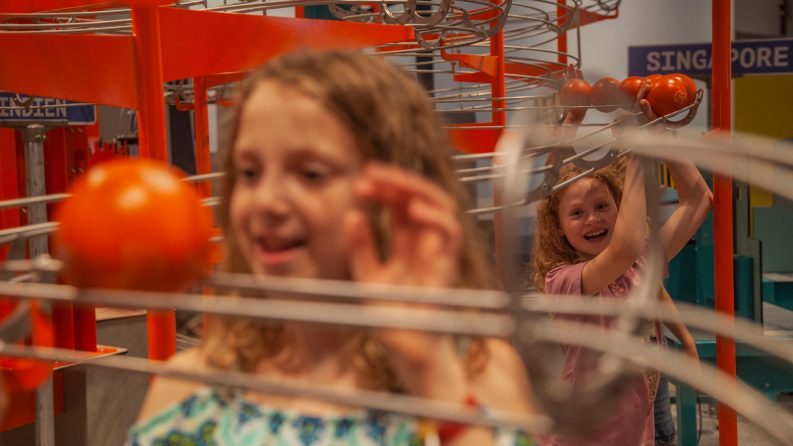
“Everything must be touched” is the museum's guiding principle. Here learning and play always go hand in hand, turning the complex into something close and clear for everyone.
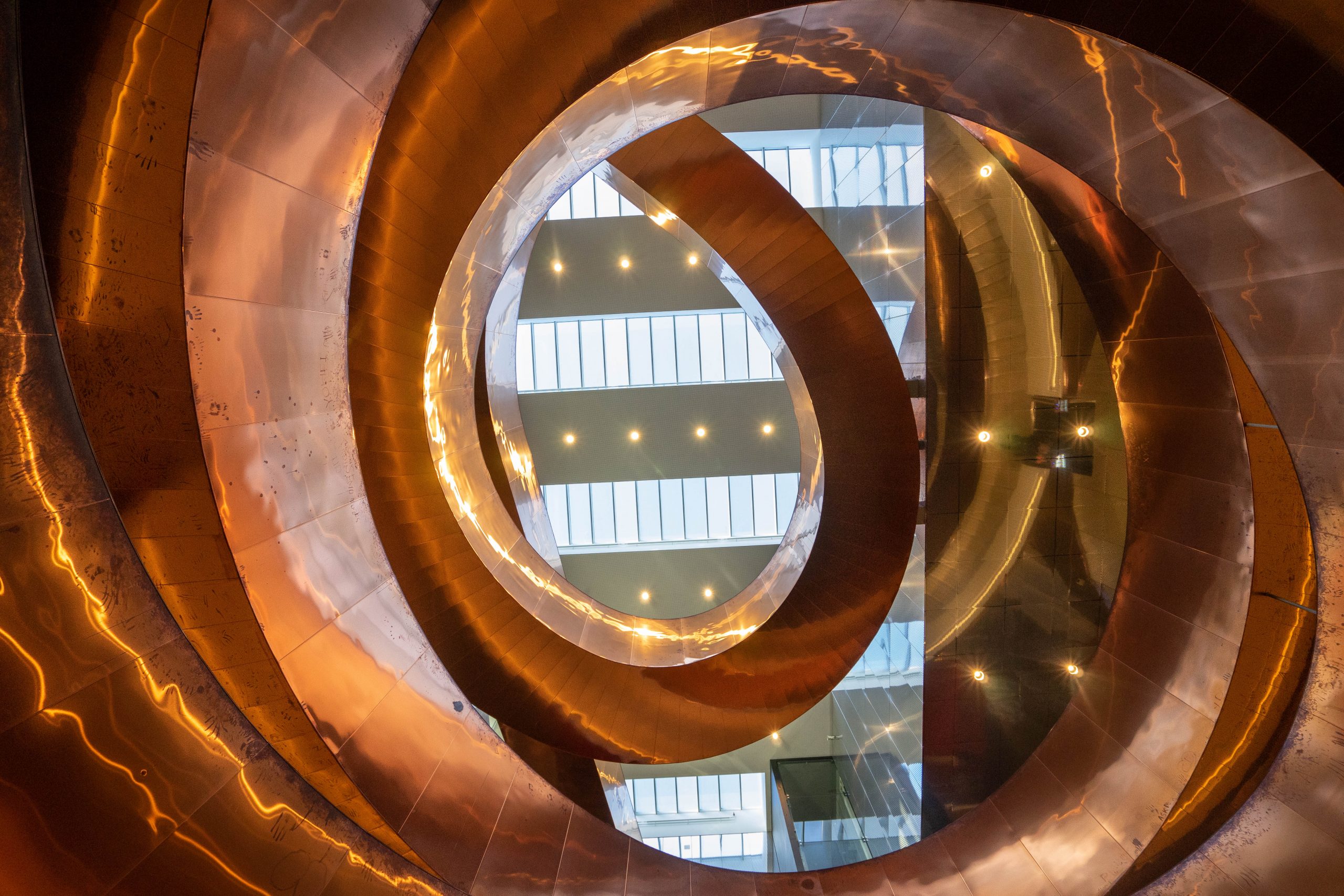
The museum's architectural symbol — a huge double spiral staircase clad in dozens of tonnes of copper. It became the new building's calling card and one of the most photographed interiors in Denmark.
Experimentarium is a science centre, not a traditional museum. Guests run their own experiments, set off lightning, and play with soap bubbles, water and light. Knowledge is born through doing.
The new building opened the world's first interactive cinema based on motion-recognition technology — audiences influence what happens on screen with their own gestures.
Light, water, soap bubbles, the human body, energy and much more. The exhibitions are built around the real science behind every exhibit.
The museum was officially opened by Queen Margrethe II in 1991 — a sign of the project's national importance for all of Denmark.
Experimentarium's mission is to transform how guests experience and understand the role of science and technology in life. Here they awaken the “science person” in each of us.
Where to find it
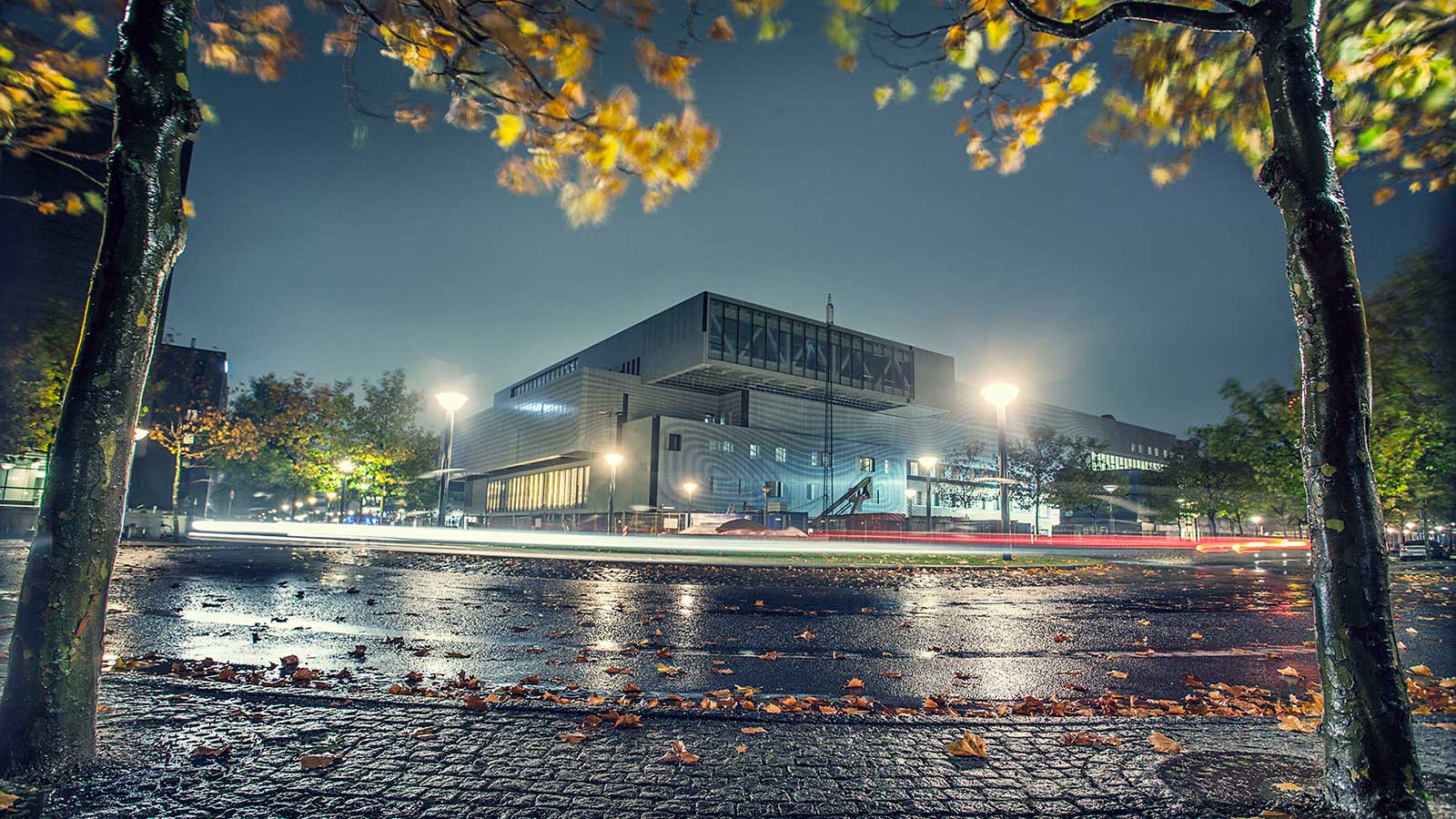
The museum is housed in the Tuborg brewery's former soft-drink bottling hall, on the harbourfront in the Hellerup district, just a few kilometres north of central Copenhagen.
Feedback
Have you been to Experimentarium, or would you like to share an idea? Tell us about your experience and your suggestions — we read every message.
No reviews yet — be the first!